top of page

PARTNERS
The CENTREPIECE consortium brings together 6 beneficiaries and 1 affiliated entity from 3 EU Member States and the United Kingdom, namely Austria, Germany, Spain, and the United Kingdom. The consortium combines complementary expertise across the hydrogen value chain and comprises 2 universities, 1 research centre, 1 SME, and 1 large company


HyCentA
HyCentA Research GMBH (Austria)
Project Coordinator
HyCentA Research GmbH is the only extra-university research institution in Austria exclusively concerned with hydrogen technologies. Since its foundation in the year 2005, HyCentA has been performing research and development projects in an international network with industry and academia regarding production, distribution, storage and application of hydrogen. HyCentA ’s fields of expertise include engineering, simulation, testing and education of hydrogen technologies like electrolysis, hydrogen storage, FCs, refuelling, measuring and safety systems.
Contribution to the project activities
In Centrepiece, HyCentA will be responsible for technical and scientific coordination, including monitoring of technical progress, synchronisation of project-related research activities, quality and timing of deliverables, the project internal communication including organisation of meetings, involving external or technical committees as well as for quality and risk management including monitoring, creation and updating of contingency plans, recovery plans and contingency strategies. In addition, HyCentA has a strong focus on single cell and short stack testing based on accelerated stress tests using SoA analytical techniques such as cyclic voltammetry (CV), linear sweep voltammetry (LSV), and electrochemical impedance spectroscopy (EIS).


SFICE
SFICE Innovative Minds (Spain)
SFICE is a small private company specialising in hydrogen technologies. Is a company founded in 2017 by a multidisciplinary team that had been working on hydrogen and fuel cell technologies since 2007 at the Aragon Hydrogen Foundation. The team has participated in more than 20 projects focused on the design, engineering, integration, assembly, commissioning, operation, and maintenance of hydrogen infrastructures.
Contribution to the project activities
Their technical expertise serves to enhance communication and dissemination efforts, acting as a bridge between academia, industry, and the broader public.
In addition, SFICE will provide its hydrogen market expertise to develop the tecnoeconomic assessment.


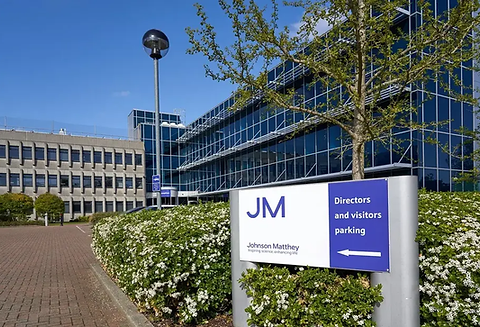
JM
Johnson Matthey (United Kingdom)
JM is a world-leading developer, manufacturer and supplier of catalysts, MEAs, CCMs and other components to FC and electrolyser developers worldwide. Significant investments continue to be made in world-class FC materials and component research and MEA/CCM testing facilities at the corporate Technology Centre in Sonning Common, near Reading, and in the world’s first dedicated electrode and MEA manufacturing facility in Swindon, Wiltshire, including multimillion € investments in advanced production-scale roll-to-roll equipment fully contained in clean rooms with Class 1000 capability. Senior personnel have
considerable experience in participating in and leading government supported R&D projects, and JM has well-established administrative, financial, and legal support groups to manage these projects and ensure successful delivery of contractual requirements. JM and partners also have a track record of recognised accomplishment and direct exploitation for technologies with Best Success Story FCH JU awards in 2019 and 2022 for INSPIRE and GAIA respectively, and Best Innovation Award for MAMA-MEA in 2020 (ALM concept development). Parent company JMP is a global leader in sustainable technologies, with over 12,000 employees in over 30 countries.
Contribution to the project activities
JM will assure an exploitation in the EU market of the innovative additive manufacturing of CCMs for PEMFC by ensuring that the
components developed are compatible with high volume manufacturing methods currently available at JM as well as implementing the quality control techniques developed within this project

TUC
Technische Universität Chemnitz (Germany)
TUC is a research-intensive institution with over 2,000 staff and approximately 10,000 students. TUC is internationally recognized for its high-quality, interdisciplinary research across engineering, natural sciences, social sciences, and economics. TUC is represented by the Department of Advanced Powertrains (ALF) from the Faculty of Mechanical Engineering and by the Department of Corporate Environmental Management and Sustainability from the Faculty of Economics, Business and Administration. Established in 2010, ALF ranks among Germany’s foremost academic institutions dedicated to cutting-edge research and advanced education in fuel cell (FC) technologies, with a primary focus on automotive applications. Drawing on a decade of experience, its multidisciplinary team has developed deep expertise in FC design, development, and validation, actively contributing to research and innovation projects with cumulative funding exceeding €50 million. ALF boasts a distinguished track record in fuel cell testing,
underscored by its involvement in FCH JU initiatives, including MAMA-MEA in 2020 (led both single cell and short stack testing as well as project coordination), and Fit-4-AMANDA in 2018, focusing on single cell and short stack characterization.
Contribution to the project activities
In CENTREPIECE, ALF will leverage its state-of-the-art facilities to assemble, test, and characterize large-area single cells and 20-cell short stacks. A dedicated short stack test bench will facilitate comprehensive assessment of KPIs and degradation behaviour of CCMs under application-relevant load profiles. Moreover, the infrastructure supports a wide range of tailored testing conditions, particularly during ASTs, enabling in-depth analysis of targeted degradation phenomena.
In addition, the Department of Corporate Environmental Management and Sustainability, leads the project's environmental and economic assessment work package. The team carries out a Life Cycle Assessment (LCA) in accordance with ISO 14040/14044 to quantify the environmental footprint of the developed manufacturing processes.


Fraunhofer
Fraunhofer-Gesellschaft (Germany)
Fraunhofer-Gesellschaft, based in Germany, is a leading applied research organisation. Founded in 1949, Fraunhofer-Gesellschaft currently operates 76 institutes and research units throughout Germany. Its nearly 32,000 employees, predominantly scientists and engineers, work with an annual business volume of 3.4 billion euros.
In CENTREPIECE project, two Fraunhofer institutes participate: Fraunhofer Institute for Solar Energy (ISE) and Fraunhofer Institute for Laser Technology (ILT).
Contribution to the project activities
Fraunhofer ISE will use its industrial-like machinery for roll-to-roll (R2R) quality control, and evaluate the MEA components including membranes, catalyst layers, and catalyst coated membranes (CCMs) regarding their quality according to given specifications. They will develop novel and industrially relevant methods where existing methods reach their limits for the quality control of membranes and catalyst loadings. These methods include those which aim for a 100% control of the membranes and coatings under test. In Fraunhofer ISE’s department for quality assurance, characterisation and simulation they provide a broad perspective of analysis approaches of both, detailed off-line and fast in-line measurement techniques for a large variety of sample types. They not only apply established tools but also develop and adapt measurement concepts to respective measurement challenges. This is supported by the simulation of measurement approaches to understand challenges and limitations of the respective methods. One of their focuses is the application and development of camera-based analysis techniques in the visible and mid-wave infrared range.
Fraunhofer ILT will develop a game changing technology, laser drying, which has never been used for the fuel cell industry and has the potential to speed-up the drying process, often the bottleneck in CCM processing, reduce the drying process footprint and improve solvent removal.


UFr
Universität Freiburg (Germany)
The University of Freiburg is one of the most research-intensive universities in Germany. It has distinguished itself as a comprehensive university that has a healthy balance between tradition and modernity. Freiburg founded a Faculty of Engineering about 15 years ago. The equipment of the Faculty of Engineering is excellent and includes, e.g a clean room for the processing of microsystems components. The Institute for Sustainable Technical Systems (INATECH), which is active in this project and is located in the faculty, has three main areas of teaching and research: 1. Sustainable Materials: the research into the energy- and resource-saving use and development of materials, components and systems. 2. Energy Systems: the development of system solutions for the sustainable supply to society through renewable, reliable and sufficiently available energies as well as the efficient use of energy and its storage. 3. Resilience Engineering: engineering methods to ensure the resilience and adaptability of systems with high societal relevance to short- and long-term changes, such as natural disasters or climate change.
Contribution to the project activities
The close cooperation with the two previous institutes at the Faculty of Engineering (Microsystems Engineering and Computer Science) and the five Fraunhofer Institutes in Freiburg results in internationally unique equipment and competence in the field of sustainability research. The group of Prof. Glunz has a long experience in the field of characterisation using camerabased and Raman-based analysis techniques.

bottom of page